The Details That Distinguish Amateur Rhinestone Work From Professional Art
Professional rhinestone art requires precision, planning, and the right methods. While the process may look straightforward, the quality of the final piece depends on factors such as alignment, materials, technique, and finishing standards. The following points outline the technical distinctions between beginner-level work and professional practice.
Stone Placement and Alignment
Precision in placement is one of the most defining characteristics of professional rhinestone work. Stones are spaced evenly and aligned in straight lines, measured curves, or specific patterns that support the overall design. In less developed work, spacing irregularities or alignment shifts may appear, which can affect the flow of the piece.
Choice of Materials
The optical performance of a rhinestone depends on its composition. High-grade glass or crystal stones refract and reflect light more effectively than plastic alternatives. Adhesive selection is also critical. Matching the adhesive to both the surface material and the intended use ensures proper bond strength and durability.
Design Planning
Professional projects typically begin with structured planning. Artists may create sketches, apply grid guidelines, or use stencils and templates to establish accurate placement before application. Without this step, it is more difficult to maintain uniform coverage and design balance.
Tools and Techniques
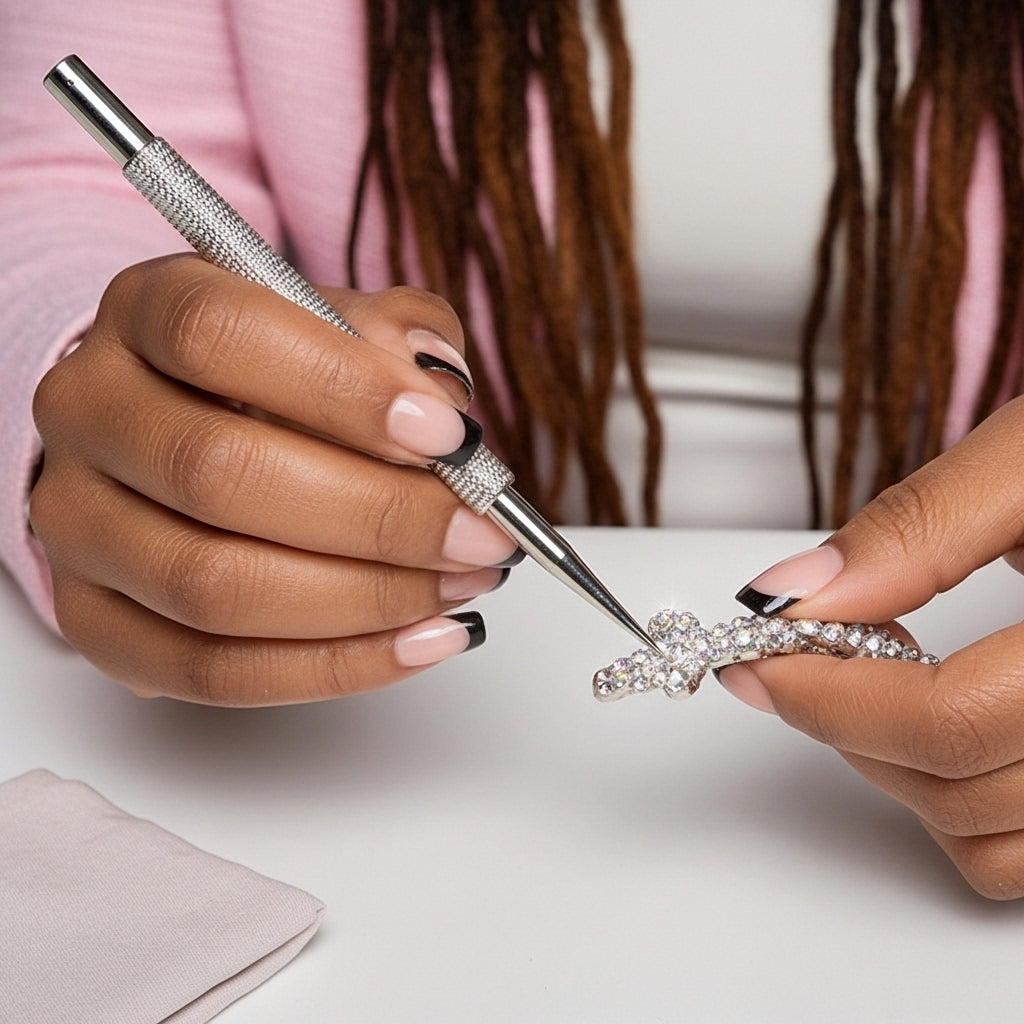
The efficiency and precision of rhinestoning improve significantly when using specialized tools. Wax pickers, fine-tipped tweezers, rhinestone trays, and the appropriate adhesives enable consistent handling and minimize placement errors. These tools make the process more controlled compared to improvised or non-specialized instruments.
Finishing Procedures
A professional-quality piece requires post-application review. This includes checking for adhesive overflow, displaced stones, or surface irregularities. Proper finishing may involve cleaning, polishing, and reinforcing areas to achieve a uniform presentation. Without these steps, the work may appear incomplete or be less structurally sound.
Durability and Longevity
Rhinestone application is both aesthetic and functional, so durability is essential. Strong adhesives, correct curing times, and added protective measures contribute to a long-lasting result. In contrast, if insufficient adhesives or improper techniques are used, the stones can loosen or lose clarity and coating over time.
In summary, professional rhinestone art is defined in part by technical execution: consistent alignment, appropriate materials, careful planning, the right tools, proper finishing, and long-term stability. These elements elevate rhinestone application from a decorative project to a refined art form, requiring considerable research and skill development.
What aspect of rhinestone art do you find the most challenging? Placement, materials, ensuring durability, etc?
-
Posted in
Pro Rhinestone Art